
Fast Facts
| Light Requirements | Full sun |
| Temperature Adaptations | Blackberries grow well in the cool spring months in cool climates. They struggle in hot summer weather. |
| Acidity (pH) Tolerance | Grow in a wide range of soil and acid types. |
| Salinity (Ec) Tolerance | Low |
| How Pollinated | Insects |
| Growth Habits | Perennial |
Additional Information
Fertilizer Requirements
Fertilize blackberries during the late winter or early spring before they break dormancy. Apply 1/4 pound actual nitrogen each year.
Water Utilization
Blackberries are deep rooted and should be watered deeply when irrigating. Apply mulch to hold moisture in the soil. Water more frequently during fruiting. Put the water where it will be used. Use a drip or soaker hose system if possible. A good mulch around the plants will help conserve moisture.
Plant Development and Care
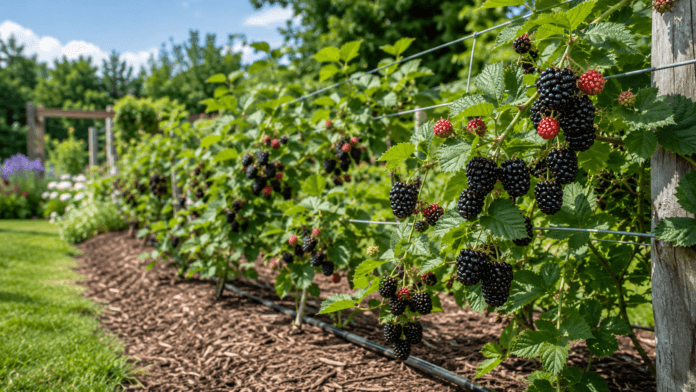
Blackberry fruits develop on the twiggy side branches of fruit on canes that grew in the previous season. Canes fruit only once and must be removed each year. Prune out weak canes and those that have already produced, leaving strong, healthy canes to produce fruit the next year. In the spring, wait until you see some green growth on the plants. Remove all dead wood that is gray and brittle (cut it at the base). This year’s crop will be produced on those canes that grew from the base last year and are brown and viable with spring growth. The easiest way to grow blackberries is on a trellis. Build a two-wire trellis about 5′ high with wires about 18″ apart or use an existing fence. Trellising places newly forming fruits above the new developing canes where they can be reached easily. In cool climates, head canes at 8′ to 10′. The farther berries are borne from the base of the plant, the smaller they will be at maturity. In winter, remove all lateral shoots that grew within 2′ of the ground, and head higher ones to 12 to 15 inches.
Germination Time (Days)
Not applicable
Seed Germination and Temperature Range
Not applicable
Common Fertilizer Deficiencies
None
